
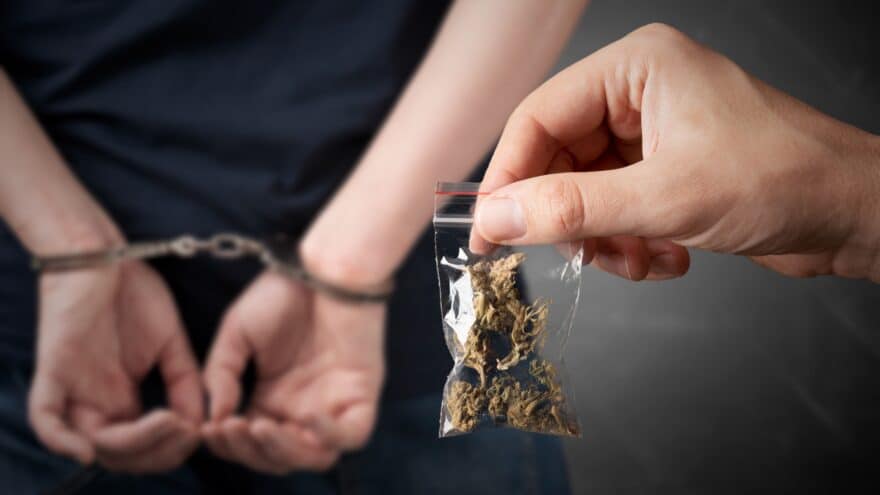
If your child has been stopped, searched, or accused of juvenile marijuana possession in New Jersey, it is completely normal to feel overwhelmed and unsure what happens next. While marijuana is legal for adults 21 and older in New Jersey, the rules are different for minors. Even a situation that may seem minor can create concerns involving school discipline, driving privileges, juvenile court, and future opportunities.
Below is what parents should know about juvenile marijuana possession laws in New Jersey, what consequences may apply, and what to do if your child is accused.
Key Takeaways: Juvenile Marijuana Possession in NJ
- Marijuana may be legal for adults 21 and older, but underage possession and use remain prohibited in New Jersey.
- Some juvenile marijuana offenses may be handled as civil or non-criminal violations, but certain situations can still lead to juvenile delinquency proceedings or criminal consequences.
- Cases involving distribution, school property, THC vapes, driving, or multiple controlled substances often carry more serious risks.
- The details matter. How the stop occurred, whether a search was lawful, and what statements were made can affect how a case proceeds.
New Jersey Marijuana Laws for Juveniles
New Jersey legalized recreational cannabis for adults age 21 and older through licensed dispensaries regulated by the state. However, marijuana possession and use by juveniles remains prohibited.
Even for adults, there are circumstances where marijuana-related charges can still arise, including:
- Driving under the influence of marijuana
- Possession on federal property
- Possession with intent to distribute
- Illegal public use in restricted areas
- Home cultivation (growing marijuana remains illegal in New Jersey)
For juveniles, the legal consequences can vary depending on the circumstances, amount involved, location, and whether police believe additional offenses occurred.
Related Reading: Everything You Need to Know Now That Marijuana Is Legal in New Jersey
What Counts as “Possession” in a Juvenile Marijuana Case?
Possession does not always mean marijuana was physically found in your child’s pocket.
In New Jersey juvenile cases, police or prosecutors may allege:
Actual Possession
This means marijuana or THC products are allegedly found directly on the juvenile or in personal belongings, such as:
- A backpack
- Clothing or pockets
- A purse or personal bag
- Personal property
Constructive Possession
A juvenile can also be accused of possession even when marijuana is not physically on them.
This commonly arises in situations involving:
- Cars with multiple teens
- Shared bedrooms or spaces
- School lockers
- Group settings
For example, if marijuana is found in a vehicle with multiple occupants, police may attempt to attribute possession to one or more individuals depending on where the marijuana was found, statements made, and surrounding circumstances.
Cases may also involve THC vape cartridges, edibles, concentrates, or paraphernalia allegations.
Is Juvenile Marijuana Possession a Crime in New Jersey?
It depends on the circumstances.
Since New Jersey legalized recreational marijuana, some underage possession or use situations may be treated as civil or non-criminal violations rather than traditional criminal marijuana charges. However, certain circumstances can significantly increase the seriousness of a case.
A juvenile may face more serious allegations when a case involves:
Distribution or Intent to Distribute
What teens may view as “sharing” marijuana can sometimes be treated as distribution under New Jersey law.
Police and prosecutors may point to evidence such as:
- Text messages
- Cash
- Packaging materials
- Multiple containers or bags
- Scales or paraphernalia
School Property or School-Related Allegations
Cases involving school grounds can become significantly more serious.
Even if the allegation involves a small amount of marijuana, schools may involve administrators, school discipline, and law enforcement at the same time.
Factors that can complicate a case include:
- Marijuana found in a backpack or locker
- Cannabis in a vehicle parked on school property
- Allegations of sharing with classmates
- School-sponsored activities or events
Driving or Vehicle-Related Offenses
If a juvenile is accused of driving under the influence of marijuana, additional consequences may apply.
Other Controlled Substances
Cases involving multiple substances can quickly become more serious.
Potential Consequences of a Juvenile Marijuana Case in NJ
The outcome of a juvenile marijuana case often depends on:
- The teen’s age
- The type and amount of marijuana or THC product
- Whether distribution is alleged
- Whether the incident occurred at school
- Prior juvenile history
- Whether additional allegations exist
Potential consequences may include:
Civil Penalties
Some cases may result in fines or related requirements.
School Discipline
Schools may impose disciplinary consequences, including:
- Suspension
- Extracurricular restrictions
- Athletic ineligibility
- Counseling or intervention requirements
Juvenile Court Involvement
More serious allegations may lead to juvenile delinquency proceedings.
Diversionary Programs or Services
Depending on the facts, juveniles may qualify for educational programs, counseling, substance-use evaluations, community service, or other rehabilitative options.
Future Record Concerns
Although juvenile matters are generally more confidential than adult criminal cases, they can still create long-term concerns depending on the circumstances.
How Juvenile Marijuana Cases Are Handled in New Jersey
Unlike adult criminal court, juveniles are typically handled through New Jersey’s juvenile justice system.
Depending on the circumstances, a case may involve:
- School disciplinary proceedings
- Juvenile delinquency allegations
- Diversionary or educational programs
- Court supervision or rehabilitation-focused outcomes
Because juvenile cases are often handled differently than adult criminal matters, it is important to understand how the process works and what options may be available.
Learn more about Michele Finizio’s juvenile crimes defense representation in New Jersey and how juvenile court cases are handled.
Why School Location Matters
Parents are often surprised by how quickly school-related marijuana allegations can escalate.
Even when the allegation appears minor, schools may involve administrators, law enforcement, and disciplinary procedures simultaneously.
Important issues may include:
- Where the marijuana was found
- Whether there was an allegation of sharing
- Whether police or school officials conducted a search
- Whether proper procedures were followed
In many situations, how evidence was obtained can become an important legal issue.
What Parents Should Do After a Juvenile Marijuana Stop, Search, or Arrest
If your child has been accused of marijuana possession in New Jersey:
Stay Calm
Encourage your child to remain respectful and avoid escalating the situation.
Avoid Volunteering Information
Do not guess or speculate about facts before fully understanding what happened.
Ask for a Parent and Attorney
If law enforcement becomes involved, request legal guidance as early as possible.
Document What Happened
Write down details while they are fresh, including:
- The timeline of events
- Where the incident occurred
- Who searched what
- Statements made by police or school officials
- Witnesses who may have been present
Early legal guidance can be especially important in cases involving school allegations, searches, statements, or accusations beyond simple possession.
FAQ: Juvenile Marijuana Possession in NJ
Can my child be arrested for marijuana in New Jersey?
Possibly. Some underage marijuana situations may be handled as civil violations, but arrests and juvenile court involvement can still occur depending on the facts.
Does “sharing” marijuana count as distribution?
Potentially, yes. Even when no money changes hands, prosecutors may argue marijuana was distributed depending on the circumstances.
What happens if marijuana is found in a car with multiple teens?
Police may try to attribute possession to one or more occupants based on where the marijuana was found, statements made, and surrounding evidence.
Are THC vapes or edibles treated differently?
They can be. THC vape cartridges, concentrates, and edibles may complicate a juvenile marijuana case depending on the facts.
Is marijuana legal on federal property in New Jersey?
No. Marijuana remains illegal under federal law, and possession on federal property may lead to additional complications.
Related Reading: Arrested for Marijuana Distribution in New Jersey? Here Are Possible Defenses
Talk to a New Jersey Juvenile Defense Lawyer
If your child was accused of juvenile marijuana possession in New Jersey, it is important to understand your legal options as early as possible. Even cases involving a small amount of marijuana can raise issues involving school discipline, searches, statements to police, or allegations of distribution.
The Law Offices of Michele Finizio represents juveniles and families throughout Moorestown, Cherry Hill, Burlington County, Camden County, and South Jersey facing juvenile and criminal allegations.
To learn more about Michele Finizio’s approach to Juvenile Defense.
Call (609) 230-0374 or fill out the online contact form to schedule a confidential consultation.
Disclaimer: The information in this article is provided for informational purposes only and does not create an attorney-client relationship. Every case is different. For legal advice regarding your specific situation, contact an attorney directly.